
The Internet Is Officially Dead. Go Play Golf.
There is a photograph somewhere of my father on a golf course in 1993. Plaid shorts, a collared shirt, a bag that looks like it's been around the world and back. He is mid-swing or mid-laugh, I can't remember which. What I remember is that nobody took the photo to post it anywhere. It just existed. A moment that belonged to the people who were there.
That used to be the default. Now it's a discipline.
Something happened to the internet and most people can feel it even if they can't say exactly what it is.
The feeds are full of what people have started calling AI slop — content assembled by something that has never been anywhere, never felt anything, optimized purely to exist and be clicked on. More than a third of all newly published websites are now AI-generated or AI-assisted. Bot traffic has surpassed human traffic for the first time. You open Twitter (or X) and the replies agree with things in the flattest possible way, language so averaged and smooth it could only have been generated for engagement. You Google something and the answer arrives instantly and confidently and is sometimes right and sometimes completely fabricated and the unsettling part is you can't always tell which.
Dead Internet Theory used to sound like something you'd read on a forum at 2am and dismiss by morning. The idea that organic human activity online had been quietly displaced — by bots and algorithmic content — felt like paranoia dressed up as insight. In 2026, it doesn't feel that way anymore. Most people who spend time on the internet recognize the feeling even if they don't have a name for it. The place feels emptier than it used to. Not quieter. Emptier. And fake.
But here's the part that gets less attention. The AI behind most of what you now read and scroll past was trained on everything people made and posted and shared over three decades. Fed into models without permission, without credit, without the writers and photographers and artists who spent years developing a genuine voice ever knowing their work was being consumed to build something designed to replace them. The creativity was taken. The human responses, the jokes, the grief, the specific weirdness of one person trying to say something true and honest to another — all of it taken and reproduced into content that is smooth and confident and faintly wrong in a way that's hard to locate but impossible to shake.
What's left looks like the internet. It doesn't feel like it.
You can still check your phone on the back nine. Nothing stops you. The phone is in your pocket, the notifications are there, the feed is doing what the feed does regardless of where you are standing.
The question is whether you do.
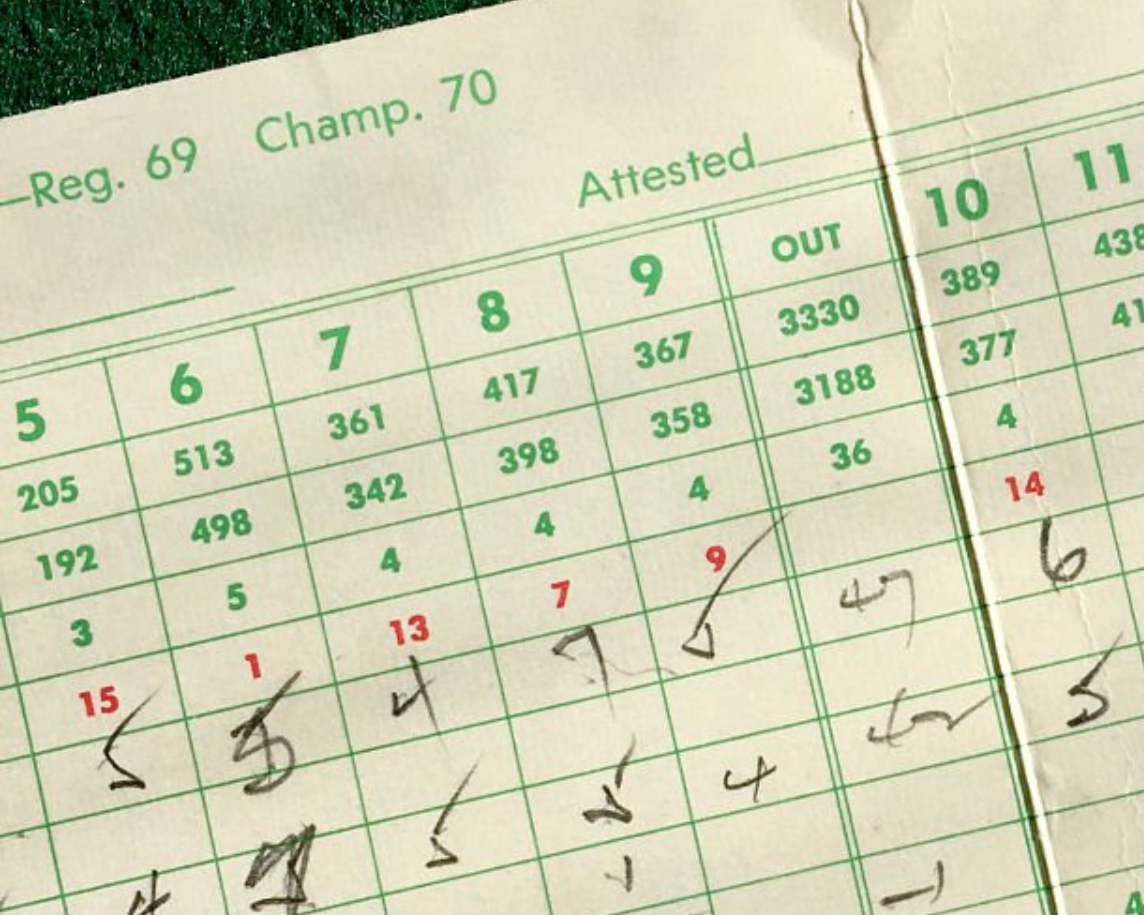
Golf is the original digital detox, even if nobody called it that in 1993 because nobody needed to. You show up with a bag and a scorecard. You walk, or you ride, and either way the game asks for your full attention and tends to get it whether you planned to give it or not. Miss three putts in a row while you choke trying to make birdie and see how much you're thinking about your phone.
There is a particular kind of morning on a golf course — late fall, low light, the course half-empty, the air with some weight to it — where leaving the phone in the bag feels less like discipline and more like common sense. The hole in front of you is asking for your presence. It will not ask twice.
This is what the '90s had that we've mostly lost. Not the absence of technology, but the presence of wherever you actually were. You went somewhere and that somewhere had your whole attention because there was no other option. The boundaries were physical. The experience was contained. Something happened and it happened to you, and that was it.
People talk about digital detox and unplugging and analog living now like they're trends, which maybe they are, but they're also just descriptions of what it felt like to be alive before your phone became the uninvited third in every conversation, every meal, every quiet moment you were trying to have. Golf gives that back. Not because it bans anything. Because it earns your attention fair and square. A four-hour walk with a scorecard and eighteen problems to solve has a way of crowding everything else out.
I don't think golf saves you from the internet. Nothing saves you from the internet anymore. It's ambient. It goes everywhere you go.
But eighteen holes at 7am, phone in the bag, fog sitting in the trees above the 4th green, the city somewhere below and behind you and not yet your problem — that's as close to the thing we lost as I've found.
The bots will still be there when you finish. The feed will still be full. The AI will have generated ten thousand more articles by the time you reach the 18th green, each one confident and hollow and built on the back of something a person made once and cared about.
None of that will have missed you.
Go play. Be somewhere real.
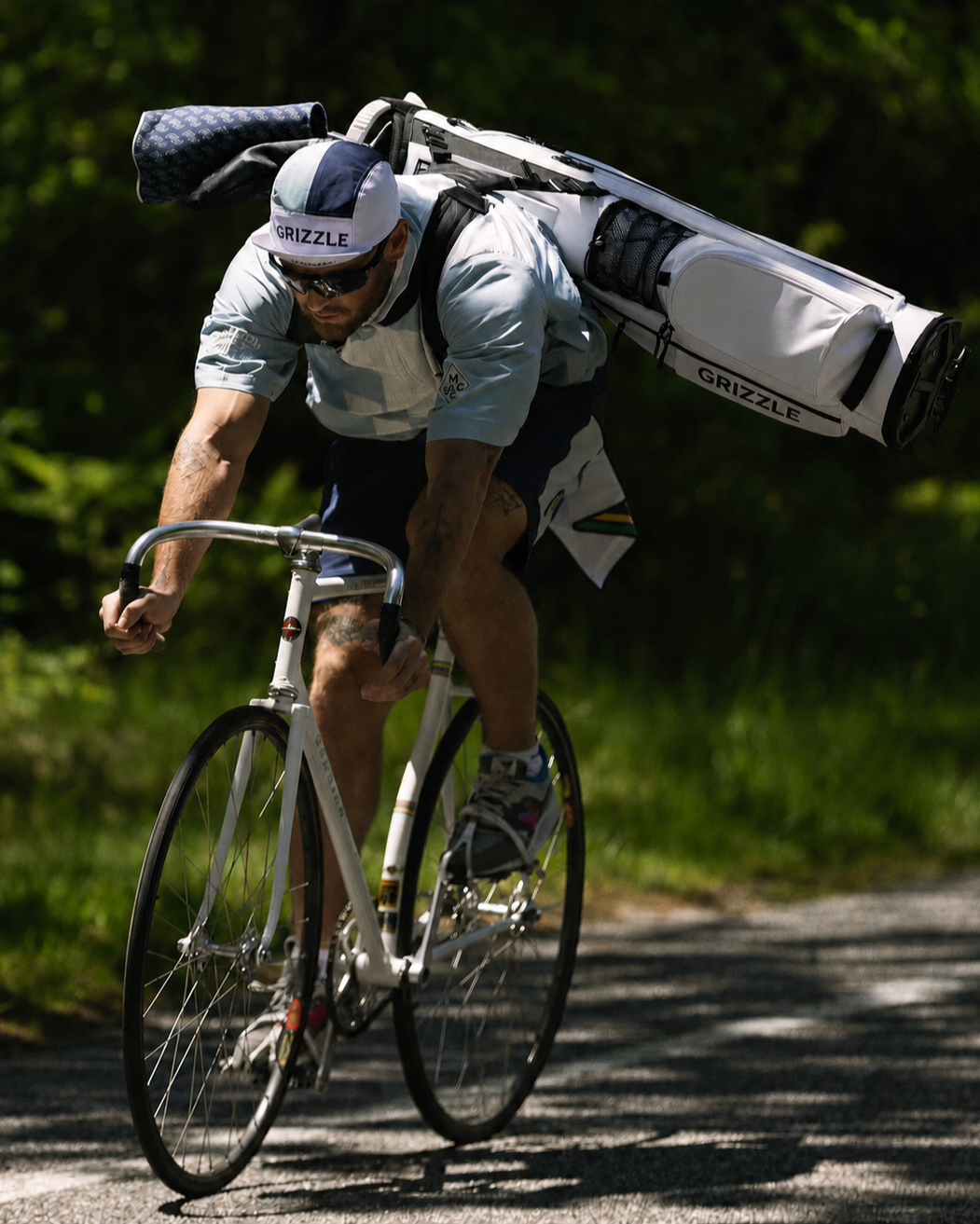
Grizzle makes golf goods for players who live beyond the clubhouse — weargrizzle.com